
Walk into a traditional safety training session in construction, manufacturing, or mining, and you’ll see people who genuinely care about going home safe. They listen, pass the quiz, and sign the roster. Then they return to the same work environment—and, over time, much of the training can fade into the background.
The challenge often has less to do with the quality of the content and more to do with how people perceive their surroundings. Our brains naturally filter familiar information. Yet most safety programs do not directly teach people how to interrupt that process and look again with purpose.
The scale of the problem remains significant. The International Labour Organization estimates that nearly 3 million workers die each year from work-related accidents and diseases. Another 395 million workers experience nonfatal occupational injuries.
These numbers persist despite major investments in safety systems, technology, and training. Something is getting lost between learning and action. Closing that gap begins with understanding how people process information on the job.
Why doesn’t safety knowledge always translate into action?
The gap between knowing and doing is well documented in occupational safety research.
A systematic review of occupational health and safety training found strong evidence that training can improve workers’ safety behaviors. However, the researchers found insufficient evidence that training alone produces comparable improvements in health outcomes such as injuries, illnesses, and symptoms.
That distinction matters.
Workers may know the correct procedure and still make a different decision when production pressure rises, conditions change, or the established routine pulls them in another direction. Knowledge is important, but behavior is also shaped by the surrounding environment.
When workers return to a setting where time pressure is real, procedures are unclear, or supervision is inconsistent, training must compete with every cue pushing them toward speed and familiarity. If a safe behavior has not been practiced and reinforced under realistic conditions, a well-established shortcut may still take over.
Completion rates and quiz scores therefore tell only part of the story. They measure participation and recall. They do not necessarily show whether someone can recognize a developing hazard, evaluate it accurately, and respond effectively during the work itself.
What role does habituation play in safety?
Habituation is the process through which repeated exposure causes the brain to respond less strongly to familiar information. It helps us move through daily life without becoming overwhelmed by every sight, sound, and sensation.
In the workplace, however, that same process can cause persistent hazards to disappear from awareness.
A frayed cable.
A missing guard.
A subtle change in floor conditions.
When these conditions remain present long enough, they can begin to blend into the expected landscape. The hazard has not changed, but the way people perceive it has.
Research published in Safety Science found that repeated exposure to the same work environment or hazardous conditions can lead workers to underestimate risk. A separate experimental study found neurological and behavioral evidence of workers becoming habituated to repeatedly encountered warning signals.
Conventional programs often teach people what a hazard looks like in a classroom image, then return them to an environment where the same hazard has become part of the background. The training may be accurate and engaging, but neither quality automatically teaches people how to interrupt habituation.
That is a perceptual challenge that better slides and videos alone cannot solve.
How do cognitive biases affect safety decisions?
Even when people notice a condition, cognitive biases can influence how they interpret and respond to it.
Confirmation bias encourages us to focus on information that supports what we already believe. Optimism bias tells us incidents are more likely to happen to someone else. Overconfidence can lead experienced workers to believe that familiarity with a task protects them from its risks.
The normalization of deviance adds another layer. When an unsafe practice is repeated without an immediate consequence, it can gradually begin to feel acceptable. Bypassing a guard, skipping a pre-task check, or tolerating a minor hazard can quietly become part of the routine.
The risk remains. The perception of that risk changes.
Research into construction hazard recognition illustrates the limits of experience alone. In one study, experienced construction superintendents were unable to identify every hazard presented to them. The study also found no clear correlation between traditional safety training and hazard-identification performance.
Standard safety training may discuss biases without giving workers a practical method for recognizing them in the moment. Someone can complete hazard-awareness training and still be influenced by assumptions during a walkthrough.
We cannot manage a bias we do not recognize.
What does effective safety training look like?
Effective safety training develops three connected capabilities: how people see, how they interpret what they see, and how they respond.
1. Perceptual skill
Workers need a structured way to examine their environment and interrupt habituation. Observation must be treated as a deliberate discipline—not something we assume will happen naturally.
COVE’s Visual Literacy methodology applies practices drawn from art education to workplace safety. Created by the Toledo Museum of Art, COVE uses visual-literacy principles to help people see details, interpret what those details mean, and decide what action to take.
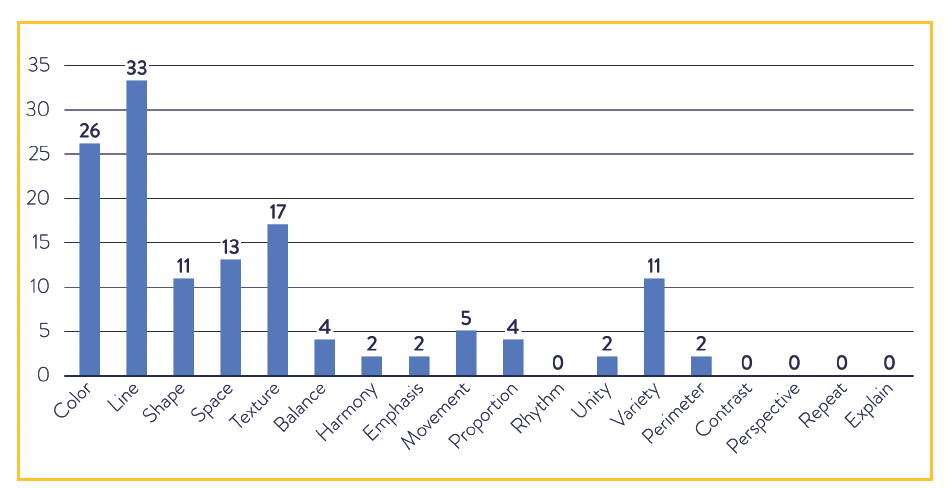
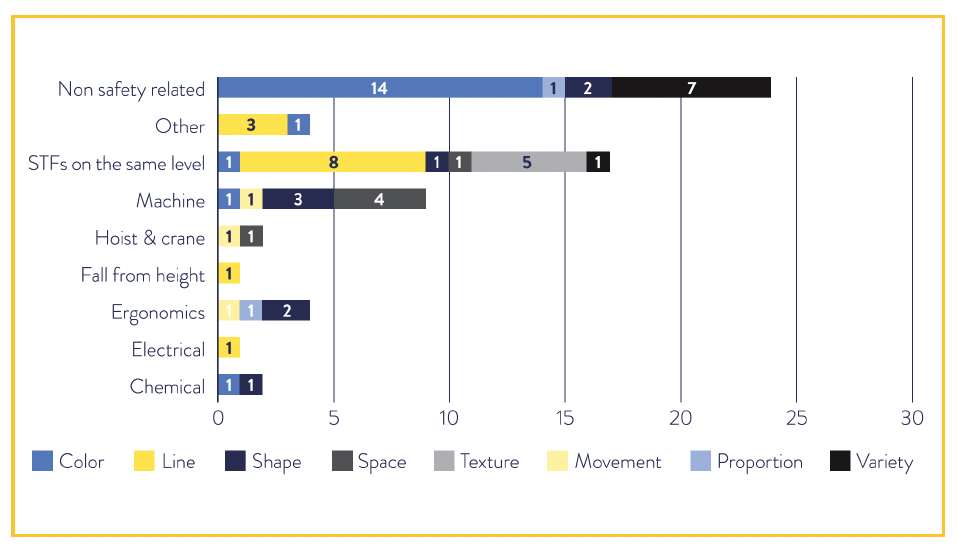
The Elements of Art—including color, line, shape, space, and texture—become practical tools for examining the workplace. Workers learn to slow down and look with intention, bringing structure to what might otherwise be a quick, passive glance.
The Campbell Institute’s research on Visual Literacy provides additional background on the connection between the Toledo Museum of Art’s visual-literacy curriculum and occupational safety.
2. Critical thinking
After observing a condition, workers need a straightforward framework for evaluating it:
What do you see?
What does it mean?
What do you do about it?
This sequence moves people from observation to interpretation and action. It also creates a shared language for describing workplace conditions objectively, reducing the confusion that can result from rushed or subjective reporting.
COVE’s approach to Visual Literacy centers on improving the ability to see, interpret, and act on visual information.
3. Reinforcement in context
Learning becomes more durable when people practice it under realistic conditions and reinforce it through continued conversation. Toolbox talks, supervisor-led walkthroughs, near-miss discussions, and peer observations provide opportunities to apply new skills repeatedly.
A single classroom session—no matter how well designed—cannot compete indefinitely with daily environmental cues unless the organization supports continued practice.
Why should safety leaders focus on leading indicators?
Many organizations still evaluate safety primarily through lagging indicators such as incident rates, lost-time injuries, and recordable events. These metrics describe what has already happened. They cannot show, on their own, whether the next shift will produce a different result.
Leading indicators examine the activities and conditions that can influence future performance. Examples include:
- The number and quality of hazard observations
- Employee participation in hazard identification
- The frequency of near-miss reporting
- The percentage of corrective actions completed
- The severity and type of previously unknown hazards discovered
- Leadership and supervisor participation in safety activities
The Campbell Institute’s implementation guide provides a detailed framework for selecting and using indicators such as proactive observations, hazard reports, employee participation, and corrective-action closure.
This proactive orientation is also reflected in international standards. ISO 45001 provides a framework for managing occupational health and safety risks through leadership, worker participation, hazard identification, monitoring, and continual improvement.
Its companion guidance, ISO 45004:2024, specifically addresses occupational health and safety performance evaluation. It recommends balancing lagging measures with proactive, leading indicators rather than relying too heavily on past incident rates.
The connection to training is direct.
Completion rates measure participation. Quiz scores measure recall. Incident counts measure outcomes influenced by many factors.
Observation quality, hazard-identification accuracy, and the speed of corrective action provide different evidence: whether learning is changing how people work.
What does this change look like in practice?
A COVE case study involving Cummins offers one example.
Cummins incorporated Visual Literacy principles into its risk-assessment training to strengthen hazard recognition. By March 2018, 225 employees had received the training. Those employees identified 132 workplace issues using Visual Literacy concepts and submitted and corrected 25 hazards through the company’s “Find It Fix It” initiative.
These are meaningful leading indicators. They show a change in what people noticed and what they did about it—not simply what they knew.
COVE has also worked with DTE Energy to integrate Visual Literacy into hazard recognition and pre-job safety practices. The DTE Energy case study describes an implementation model in which union and management leaders learned and taught the methodology together.
How can organizations close the gap between training and action?
Five practices help turn training into observable workplace behavior.
1
Connect Training To The Work
Build learning around the hazards and conditions employees actually encounter. Risk-based training aligns learning objectives with task-hazard analyses and directs attention toward the most likely and severe risks.
2
Develop Perceptual Skills Alongside Technical Knowledge
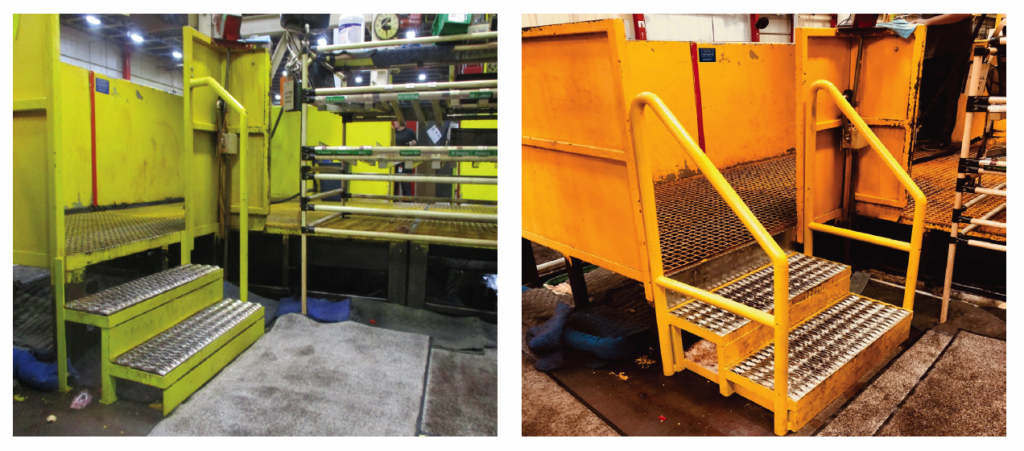
Teaching someone what a hazard is does not guarantee they will notice it in a familiar, visually complex environment.
Structured observation methods—including COVE’s Seeing the Whole PICTURE approach—help transform passive looking into active seeing.
3
Reinforce Learning In The Field
Some of the most important learning occurs after the formal session ends. Supervisors can strengthen new habits by conducting observation-focused walkthroughs, asking crews what they noticed, and providing immediate feedback when workers demonstrate safe behaviors.
4
Measure What Matters
Track the number and quality of hazard observations, the clarity of hazard descriptions, the time between identification and corrective action, and the frequency of employee-led safety conversations.
These indicators reveal whether learning is producing behavioral change or simply generating certificates.
5
Make Leadership Visible
Workers notice what leaders consistently prioritize. When managers and supervisors use the same observation practices they expect from their teams, participate in training, and respond constructively to reported hazards, they demonstrate that seeing clearly and speaking up matter.
ISO identifies leadership, worker participation, hazard identification, performance monitoring, and continual improvement as essential parts of proactive occupational health and safety management.
That message can shape behavior more powerfully than any single training session.
Safety training was never meant to carry the full weight of workplace performance on its own. Organizations move beyond performance plateaus when they stop treating training as a one-time event and begin supporting it as part of a larger system—one designed to help people see more clearly, think more critically, and act more decisively.
The path from reactive compliance to proactive hazard identification starts by recognizing that safer workplaces require more than information.
They require a better way of seeing.