
Why Is Hazard Identification So Challenging?
- We become absorbed in solving yesterday’s problems and lack time to proactively look for tomorrow’s.
- We may feel uncertain about what constitutes a hazard and fear being wrong when speaking up.
- Organizational culture may discourage uncovering more issues, leading to an “Ostrich Effect” where unpleasant information is avoided.
- And at times, we simply no longer see the environment around us because it has become so familiar.
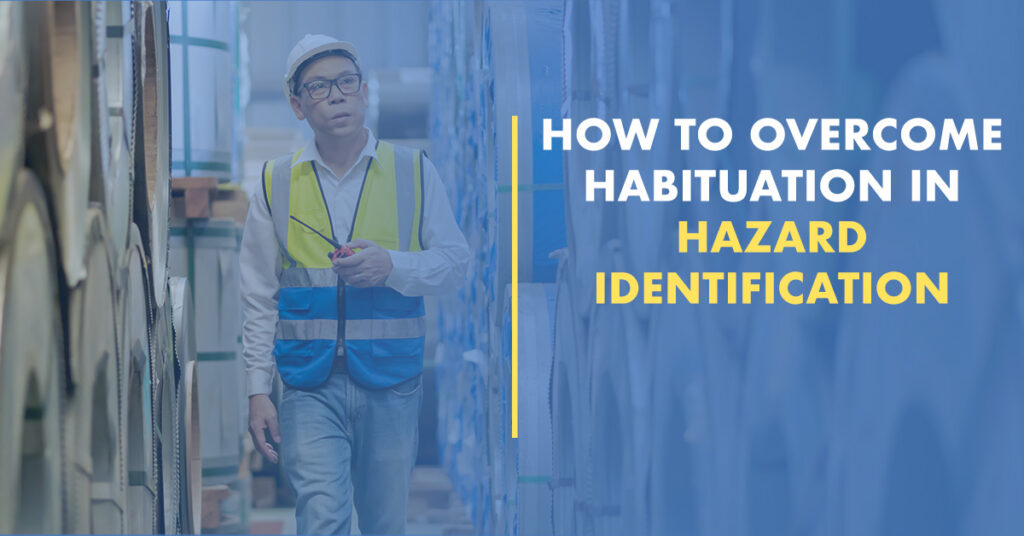
Can this really be true? Can we become so accustomed to our surroundings that we stop noticing important details? The answer is yes. This phenomenon is known as habituation, and it affects how we see, interpret what we see, and respond to the world around us.
Common examples include:
- Not hearing café background music after sitting for several minutes.
- No longer smelling strong odors that remain present.
- Experiencing a muted sense of taste with familiar spicy foods.
- Forgetting the feeling of a watch or jewelry shortly after putting it on.
- And in the workplace, failing to notice a missing machine guard or clutter left on a platform because it has blended into the background.
The Science Behind Missing Hazards
Habituation occurs because our brains respond less to repeated stimuli; what doesn’t change gets filtered out. Our attention is naturally drawn to movement, changes, and new objects—signals that may indicate potential threats. When something becomes routine, the brain downgrades its importance, and we may literally no longer see hazards that could cause harm.
This matters because, for sighted individuals, visual information accounts for roughly 90% of the data the brain processes. If we aren’t responding to what’s in front of us, we risk overlooking conditions that can lead to incidents. In high‑risk environments, workers can become so accustomed to recurring hazards that they underestimate risk, especially when nothing bad has happened over time. The absence of negative outcomes can create a false sense of safety.
So how do we interrupt habituation and see our work anew again? Several approaches can help:

Fresh Eyes – Bring in individuals from other areas who are unfamiliar with the workspace. Compare what they see with what you see—it often reveals what familiarity has filtered out.

Change the Environment – Modify the physical space by moving equipment when possible, updating colors, or refreshing signage. Even small changes can reactivate attention and shift perception.

Visual Literacy as a Solution – Teach systematic tools and techniques that help people see with structure and discipline rather than relying on automatic, biased visual processing. Visual Literacy builds awareness of how we interpret what we see and equips us to recognize when habituation may be at play.
Seeing Differently
Education in Visual Literacy strengthens the competency to see, interpret, and respond with intentionality. When we learn to see differently, we uncover new insights, recognize hidden hazards, and sometimes discover solutions in unexpected places. Applying these tools—originally developed in the arts—creates powerful new ways to counter habituation and enhance hazard identification across all types of work environments.

Take this quick assessment to see how well you are overcoming habituation in your hazard ddentification efforts.