

White Paper: The New View Of Analyzing Incidents
This white paper reviews the evolution in the past decade of the “New View” of incident analysis. Critiques and objections to traditional safety “accident investigation” models and practices, new perspectives and theories on the causes of incidents, new pathways to find causes, new objectives of analyses, new skills and tools, and a new terminology are part of this evolution. The “New View” is an amalgam of books (Safety Differently by Sidney Dekker1; Safety – I and Safety – II by Erik Hollnagel2; Better Questions by Todd Conklin3; principles of human and organizational performance (HOP), and human performance and human factors. Visual Literacy, an innovative methodology developed in the past five years re-purposes art education principles, applying them to hazard identification, risk assessment, incident analyses, and safety leadership.
To be sure, traditional safety’s legacy approaches to incident analysis are still widely used. In all three incidents cited in this white paper, the root cause (traditional safety’s Holy Grail of incident analyses) could be workers were momentarily incompetent (traditional safety’s default cause). Many incident reviews to this day are supported by the belief that 90 percent of incidents are caused by workers.4
It seems human nature does not want to spend any more time than necessary analyzing failures, most of all fatalities. A rush to judgment is common. The least complicated path is to quickly put questions to rest by blaming the victim and stating human error was the sole cause.
“We are actually quite good at learning, but we just do not learn well from failure,”5 says Todd Conklin.
The lure of root cause analysis is the promise of providing a simple but definitive answer to a problem. It satisfies what Friedrich Nietzsche called a “fundamental instinct to get rid of painful circumstances”6 Nietzsche also put the attraction of root cause another way: “Any explanation is better than none at all.”7
But zeroing in on a single cause seldom leads to lessons learned, especially if the remedy is to retrain or discipline the supposedly at-fault worker or workers. This learning deficit increases the chances of a similar incident occurring again, be it a serious injury or fatality, a near miss or victim-less property damage. Too many incident studies continue to be narrowly focused, lacking in critical thinking, subject to biases, even organizational politics, and result in flawed conclusions, overlooked hazards, and undiscovered causes. The blame game and insistence on human error and the emphasis on failure rather than learning combine to erode worker trust in the process, reduce worker engagement, and result in less reporting of incidents from the front lines. Incident analyses are one of safety’s great learning tools. Too many practices today undercut potential learning that can be leveraged to mitigate problems and prevent a similar incident in the future.
This white paper will use the terms incident, event, incident analysis, incident review, incident studies, but not safety’s old standby, accident investigation. This change in language was reflected in a title at the 2023 American Society of Safety Professional’s conference: “Changing Incident Investigation to Event Learning.” Not one of the conference sessions used the word “accident.”
“Accident” implies a chance occurrence outside your immediate control,”8 writes Dr. E. Scott Geller. The term is fatalistic and self-defeating. Why study an event that was out of everyone’s control? “Investigation” carries the baggage of a policing term that is associated with catching the culprit. Employees are less likely to engage and contribute to policing action seemingly aimed at finding who is culpable.
“How can we promote fact-finding over fault-finding with a term like ‘investigation’ defining our assignment,”9 writes Dr. Geller.
Major tenets of the New View:
- “Saying an event was caused by human error or not following procedures is like saying an object fell due to gravity. It’s always true, it just doesn’t teach us anything.” Todd Conklin, 201810
- “… it is rather suspicious if one type of cause can be used to explain 90 percent of all (incidents). It is not true.” Erik Hollnagel 201411
- The traditional approach of asking why five times to arrive at a root cause of an incident is flawed: the failure probably was not linear and there almost never is a single root cause. Mark Alston, 202112
- Focus on “what” caused the incident, not “who.” Response to incidents cause a level of emotions that can lead to witch hunts rather and true learning sessions for the organization. Phillip Dowland, 201913
Safety’s predilection for human error as the root cause of an incident is problematic for four reasons:
1
Most incidents are not linear and do not have a single “root” cause;
2
The common rush to indict an individual for causing an incident turns off employees, making them less likely to provide inputs;
3
The blame game preempts learning. What can be learned to prevent a similar incident in the future if the cause is all in a worker’s bad attitude or reckless behavior?
4
“Who” puts the focus on people and leads to a more emotional examination than focusing on “what” – which leads to a broader, more detached consideration of “what happened.”
Observe and understand the gaps between “how work normally gets done” (the reality on the ground) and the pre-planned “work as intended” (the policies and procedures drawn up in meetings). The gaps can lead to incidents. Ron Gantt 201714
Incidents do not occur in a void. The context in which an incident occurred must be studied for traditionally non-safety contributing factors, such as weak signals, unclear signals, production pressure, resource constraints, poor communication, goal conflict, flawed processes, design shortcoming, surprises, change in plans, trade-offs, and the lack of importance of the task to management. Mark Alston, 2021.15
Put aside emotions and personal biases. “What you look for is what you find. If you are looking for certain causes or conditions to fit an incident category, they you’ll find them if you want to find them.” David Provan, 2020.16
Build-up to the New View
Traditional safety beliefs regarding incident causes have been criticized for years, predating the rise of the New View. “Do you really believe there is a single root cause?” asked Dr. E. Scott Geller in an April, 2000, article in Industrial Safety & Hygiene News (ISHN).17 Geller advised considering environmental factors (tools, equipment, engineering design, organizational climate and housekeeping); behaviors (the actions of everyone relating to an incident); and the personal internal states of feeling of the people involved (their attitudes, beliefs, perceptions and personality characteristics). In other words, Geller asked to consider context.
Asking “Why” five times (The 5 Whys theory of incident causation) in a root cause analysis will lead to these problems, according to critics:
- Tendency for analysts to stop at symptoms rather than going on to lower-level root causes.
- Inability to go beyond the analyst’s current knowledge – the reviewer cannot find causes that they do not already know.
- Lack of support to help the analyst provide the right answer to “why” questions.
- Results are not repeatable – different people using five whys come up with different causes for the same problem.
- Tendency to fixate on a single root cause, while each question could elicit many different root causes.
- Considered a linear method of communication for what is often a non-linear event. 18
Critics have found shortcomings in the Swiss Cheese Model of Incident Causation19. James Reason’s model holds that slices of Swiss cheese act as barriers to incidents, but when holes (weaknesses or vulnerabilities) line up in the slices, say management deficiencies, inadequate controls, physical failures and unsafe acts, the result is an incident. One of the first criticisms of the model came from James Reason himself. He worried that the model was being applied too broadly and too dogmatically.20 Critics further claim the model:
-
Directs reviews to only the issues causing the event
-
Does not identify or fix other issues identified
-
Does not assist in identifying work as normal
-
Limited application of what works well21
Rethinking How We See Incidents
Visual Literacy is one methodology to avoid flawed incident analyses by training workers or review teams to “see better;” to use a broad lens to see the potentially dangerous gaps between how work gets done versus how it is intended via pre-planning. Hazards that can cause incidents are revealed in how work gets done, and in the reasons for the gap between reality and intent. The scope and depth of Visual Literacy observations and descriptions take into account the context in which the incident occurred. This is essential to capture multiple causes.
Visual Literacy aligns with the new view of analyzing incidents by:
- Avoiding the blame game, emphasizing “what” not “who”;
- Using an expanded field of vision and close observation to deconstruct the context or work environment surrounding the incident;
- Asking what a hazard “means” in relation to the incident through interpretation and analysis and critical thinking;
- Raising important questions about the incident based on analysis and interpretation of evidence; and
- Improving communication skills of the incident review team to improve organizational understanding of what happened; making effective corrective actions; and ensuring that the incident results in organizational learning.
A challenge in event analysis and recreating events is that the factors that lead to unplanned incidents are hard to see in retrospect. Visual Literacy helps improve how incident review teams reconstruct their understanding of events. No matter if it’s an incident, a near miss, a spill or release, finding an effective way to engage teams in understanding what was and what was not seen is fundamental to learning from incidents and taking appropriate corrective actions. Visual Literacy tools and techniques allow teams to improve the quality of the incident analysis itself. It also helps us appreciate what workers may have seen, interpreted and reacted to in the moment. Rebuilding the visual elements of the incident helps us properly understand the whole picture and the correct responses.
Imagine arriving at the scene of an event. Visual Literacy calls for taking a step back and pausing to fully observe the work environment — be it a highway, a roof, a storage area for decommissioned equipment, a trench, any work situation involving an incident or near miss. Describe what you see, analyze and interpret how it relates to the incident using critical thinking and avoiding personal biases.
Complement your perceptions with input from incident witnesses and others familiar with the hazards of “work as normal” and “work as done.” Visual Literacy trains workers to “see” beyond the obvious. And too many incident reports do not go beyond what is obvious.
Critical thinking is an essential part of Visual Literacy methodology – and incident analyses. Critical thinkers are skeptical, open-minded, value fair-mindedness, respect evidence and reasoning, respect clarity and precision, look at different points of view and will change positions when evidence and reason leads them to do so.
In assessing an incident or near miss to arrive at an accurate finding, one must come to the case with an open mind, an attitude of fairness, respect for evidence, respect for clarity and precision, look at various points of view and be willing to change one’s mind when evidence and facts dictate so.
Clarity, precision, an open mind and an attitude of fairness are only possible when scrubbed clean of personal biases. Biases that can negatively affect analyzing an incident include:
Overconfidence Bias
The tendency for a person to overestimate their abilities. It may lead a person to think they’re a better-than-average analyst or an expert in incident causes. Overconfidence bias may lead to not considering all of the evidence and other points of view relating to an incident.
Availability Bias:
The human tendency to rely on information that comes readily to mind when evaluating incidents or making decisions. The result? A possible hasty rush to judgment.
Status quo Bias:
A cognitive bias based on emotion. Many people have an emotional fear of change. This tendency to “stick with the way things have always been done around here” preempts approaching an incident review with an open mind and respect for evidence and other perspectives.
Implicit Bias:
A negative attitude, of which one is not consciously aware, against a specific social group. This is another bias that can lead to “blame the worker” incident causation conclusions.
Confirmation Bias:
The tendency to search for, interpret, favor, and recall information in a way that confirms or supports one’s prior beliefs or values.
Case Studies
Let’s apply Visual Literacy, critical thinking, and the effect of potential biases to the three case studies studied by NIOSH. These case studies are taken from NIOSH’s Fatality Assessment & Control Evaluation (FACE) Program.

Incident #1
A seven-man crew prepared to close the westbound lane of a two-lane highway to repair damaged guardrails. A flagger was at one end of the eastbound lane and a second flagger positioned at the other end. The crew placed alert signs for vehicles in preparation for stopping all traffic and using the eastbound lane for two-way traffic to be controlled by the flaggers, using two-way radios.
One of the flaggers walked out into the eastbound lane with his back to oncoming traffic as he faced the other flagger. Traffic eastbound had not yet been stopped. The flagger was struck by a Honda Accord and killed. The driver of the Accord said his vision was obscured by sun glare and he did not see the victim.
Superficially, this event would appear meet the single root cause of human error. The flagger walked onto the highway with his back to traffic and was fatally struck by a vehicle.
Three biases could reinforce this conclusion: implicit bias, a negative attitude towards workers and their thinking and behaviors; confirmation bias, the belief long-held that workers take reckless chances; and availability bias, focusing on the most obvious evidence – the flagger on the highway with his back to traffic. Again, human error.
But a second contributing factor was stated by the driver of the vehicle. He was temporarily blinded by sun glare and did not see the victim until hitting him.
Visual literacy uses elements of art – color, lines, shapes, space and texture – to analyze a work environment. Use of these elements raises questions:
Color – was the flagger wearing a high-visibility lime green or orange mesh vest?
Space – Was the crew placing alert signs too far away from the flagger to alert him that traffic was still coming on the highway?
Observation of spacing and distance leads to another question: Was the crew placing signs preoccupied with their work and failed to notice the flagger walking onto the highway?
Shapes – Was the lettering of the alert signs indicating an upcoming work zone large enough to be noticed by motorists? Was the shape of the signs large enough? Why didn’t motorists slow down as they passed the signs? Was there a sufficient number of alert signs placed?
Taking these possible factors into account, critical thinking – being fair-minded toward the flagger – might focus on what the flagger on the highway saw or didn’t see that caused him to turn his back to oncoming traffic.
Looking through the eyes of the crew, how visible was the flagger in the highway? How would the crew warn the flagger? How did they communicate? In the eyes of the second flagger at the far end of work zone, how visible was the flagger on the highway? What did he see and not see? How would he warn the flagger in the highway traffic was still coming?
Input from the vehicle driver who struck the flagger indicated he was blinded by sun glare. Recreate his drive at the same time of day under similar weather conditions. What could he see, and not see? What was his speed when he hit the flagger? What were his actions? Did he wearing sunglasses? If not, why? Did he have his windshield blinder pulled down? If not, why? Did he know he was in a work zone, or is it possible he missed the signage?
Visual Literacy “sees” the incident, precursors and the surrounding context through the eyes of the crew members, the flaggers, and the vehicle driver. Their clear and concise input may have to be coached and are vital incident data points. The speed of the vehicle is a data point. Photographs, written reports, technical assessments, measurements, placement of the alert signs, weather conditions are more data points.
Incidents produce a large amount of data. Visual Literacy techniques can identify key data points from a maze of information to help the analysis team in how they see, interpret, analyze and communicate, within the team, within the organization, and to outside entities such as law enforcement, clear and concise information.
Again, this event would appear meet the single root cause of human error. The mechanic working by himself over-reached for a component and tipped over the electrical cabinet. End of story, or a quick review of the details would conclude. There were no witnesses to provide input.
Again, three biases could reinforce this conclusion: implicit bias, a negative attitude towards workers and their attitude and behaviors; confirmation bias, the long-held conviction that workers, especially when working alone, will take reckless chances; and availability bias, focusing on the most obvious evidence – the mechanic inside the electrical cabinet overreached and tipped over the cabinet. This is a quick, short analysis.
Visual Literacy looks through the eyes of the mechanic to better understand his actions. Were the rusted, deteriorated leg supports of the cabinet difficult to see? Was it easy to spot the missing anchor to the wall? It seems the mechanic did not take any precautions to stabilize the cabinet. And his actions inside the cabinet – stepping on shelving to reach higher – raise the issue of context. Was he under pressure to finish the job? Did he lack resources, such as a step ladder, to pick components from a higher level. Was the job considered not a priority – cleaning out decommissioned equipment – meaning there was no pre-planned work as intended and leaving the mechanic to get the job done quickly?
Though there were no witnesses, input from coworkers and supervisors is important. They would know if cleaning out decommissioned equipment was a priority or not. They would know if resources, equipment such as a stepladder, were readily available and frequently used. They would know if large cabinets like the one the mechanic worked on were usually anchored to a wall. They would know if the job involved work at intended: inspecting equipment and ensuring it is stabilized before cleaning it out. If so, what caused the gap between work as intended and work as normally done?
Gathering input from co-workers and supervisors creates more data points for this incident analysis. The more data points collected and analyzed makes for a more complete and thorough analysis.

Incident #2
A mechanic was removing salvageable parts from a decommissioned, non-working electrical cabinet. The cabinet had racks of shelving and was approximately five feet wide, seven feet high and one foot deep, and weighed 993 pounds. It had rusted, deteriorated leg supports and was not anchored to a wall. The mechanic was working alone. To reach some components higher inside the cabinet, he had to stand on the bottom shelf. While he stretched to remove the components the cabinet tipped over and trapped the man underneath as it crashed to the ground. The victim was pronounced dead upon arrival at a nearby hospital.
Incident #3
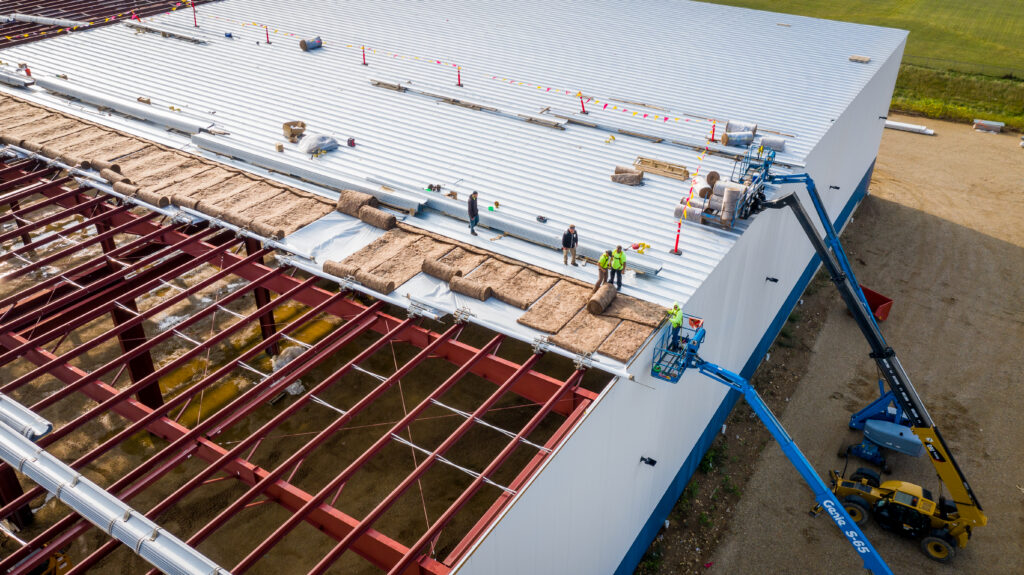
An out-of-state roofing contractor was hired to install insulation on a warehouse roof. The crew consisted of three roofers and a foreman on the ground. The roofer closest to the peak of the roof pulled the insulation tight to fully stretch it out. The insulation tore and the roofer lost his balance. He staggered forward and stepped onto an unguarded skylight panel. The skylight shattered from his weight, causing him to fall 30 feet to the ground and strike his head on concrete. He was pronounced dead at the scene.
Fall protection equipment was available but not used by any member of the crew that day. The crew said they received no training on how to properly wear fall protection. They also said they had not received any type of worker safety training.
A rushed incident analysis would seize on several facts surrounding this story. A small roofing contractor consisting of four men was brought in from out of state. Fall protection equipment was not available. Workers received no safety training.
Three biases could come into play: implicit bias, a negative attitude towards small contractors and their frequent lack of equipment and training; confirmation bias, the belief that small, out of state contractors are employed to keep costs down; and availability bias, focusing on the most obvious evidence – the no fall protection, no training. A quick conclusion can result: the host employer used a cheap contractor without emphasizing safety to get a low-cost roofing job.
Visual Literacy would use multiple perspectives to analyze this incident. What did the three roofers huddled on one part of the roof see or not see? Were all four roofers aware of the skylight, and it was not guarded? Did they see the worker at the top of the roof struggling to stretch the insulation as far as possible? Did they warn him? What did the foreman on the ground see or not see? Was he positioned to be able to see the roofer at the top of the roof working with the insulation? Did he have stop work authority?
Input from the host employer: how did he vet and selected contractors? What were his contractor oversight responsibilities? Did he go onsite to review how work was to be done before the job started? Did he point out hazards like the unguarded skylight? Why would he hire a contractor crew from out of state with no fall protection and no safety training?
This is another incident with multiple data points and many questions relating to the context of the work. This is not a linear cause-and-effect incident. There is no single root cause. Contributing causes: lack of fall protection, lack of safety training, lack of robust contractor safety oversight by the host employer, poor contractor vetting by the host employer, greed – the desire to repair the roof at the lowest cost by hiring a small contractor with no safety protocols.
Gathering input from co-workers and supervisors creates more data points for this incident analysis. The more data points collected and analyzed makes for a more complete and thorough analysis.
An important part of Visual Literacy incident analysis training and practices uses critical thinking to ask:
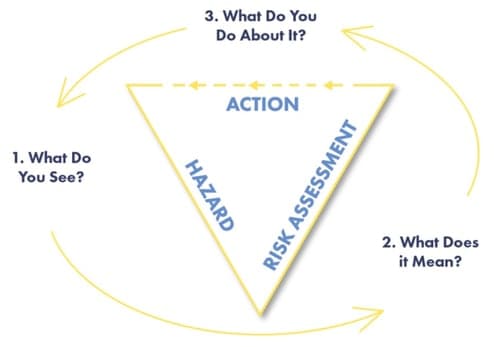
What is observed
(flagger on highway; mechanic working quickly; roofers with no safety equipment or training)?
What does it mean
(possible poor highway work zone communication; pressure to clean decommissioned equipment quickly in a job not considered a priority; host employer valuing low pricing over safety precautions).
What do you do about it?
Collect, analyze and identify incident causes. Accurately and concisely describe what happened in a report and list mitigation steps so the incident will not be repeated. Communicate findings and fixes to all levels of the organization. Employee confidence, trust and engagement in future incident analyses depends on candid transparency on the need for remedial actions and reporting back to the organization when those steps have been completed.
This is how incident analyses can be leveraged as organizational learning opportunities. Analyses must be fair, truthful, transparent and focus not on what failed, but on what has been learned to prevent similar incidents in the future. Again, communicating findings and action steps, and reporting when actions have been taken, shows that the organization is truly supportive of continuous learning.
References
- “Safety Differently – Human Factors for a New Era.” Dekker, S. (2015) CRC Press.
- “Safety – I and Safety – II The Past and Future of Safety Management.” Hollnagel, E. (2014) Ashgate.
- “Better Questions An Applied Approach to Operational Learning.” Conklin, T. (2016) CRC Press.
- “Human Error Is Not the Real Cause of Accidents.” Shotwell, H, P. (Posted online Nov. 12, 2018). Atlantic Environmental Inc.
- “Better Questions An Applied Approach to Operational Learning.” Conklin, T. (2016) CRC Press.
- “Beyond Good and Evil.” Nietzsche, F. (1886) C.G. Naumann.
- “Twilight of the Idols.” Nietzsche, F. (1889) Hackett Classics.
- “What’s Wrong With ‘Accident Investigations’? Geller, E. (2000) Industrial Safety & Hygiene News.
- ibid.
- “Investigations Differently: A Safety II approach to investigations.” PowerPoint presentation by Alston, M. (2021)
- “Safety – I and Safety – II The Past and Future of Safety Management.” Hollnagel, E. (2014) Ashgate
- “Investigations Differently: A Safety II approach to investigations.” PowerPoint presentation by Alston, M. (2021)
- “Incident Investigation: Learning vs Blaming.” Dowland, P. (posted online 2019) Safety Differently.
- “Safety Differently – Incident Reporting & Incident Investigations.” Gantt, R. (posted online 2017) Vector Solutions.
- “Investigations Differently: A Safety II approach to investigations.” PowerPoint presentation by Alston, M. (2021)
- “A Field Guide to Safety Professional Practice.” Provan, D. (2021) Safety Futures.
- “What’s Wrong With ‘Accident Investigations’? Geller, E. (2000) Industrial Safety & Hygiene News.
- “Limitations of the Five Whys Technique in Agile Retrospectives.” Pahuja, S. (posted online 2015) InfoQ
- “The Swiss Cheese Model of Safety incidents: are there holes in the metaphor?” Perneger, T.V. (published online 2005) National Library of Medicine.
- “Good and Bad Reasons: The Swiss Cheese Model and Its Critics.” Larouzee, J. and Le Coze, J.C. (2020) Safety Science.
- “Investigations Differently: A Safety II approach to investigations.” PowerPoint presentation by Alston, M. (2021)
- “Safety – I and Safety – II The Past and Future of Safety Management.” Hollnagel, E. (2014) Ashgate.
- ibid.