

American Axle & Manufacturing Customer Journey
American Axle & Manufacturing (AAM), now Dauch, partnered with COVE to integrate Visual Literacy into its safety program, strengthening hazard recognition on the shop floor.
Powering A Safer And More Sustainable Future: Visual Literacy for a High-Risk Industry
COVE: Center of Visual Expertise has partnered with American Axle & Manufacturing (AAM), now Dauch, based in Detroit, Michigan, to integrate Visual Literacy training into AAM’s evolving “people-first,” behavior-based safety program. Being able to identify and describe what we see, assessing what it means – the potential severity and frequency of risk — and what we do as a result, is crucial in the dynamic and fast-paced environment of vehicle and components manufacturing.
Research indicates we may see as little as 10 percent of what we look at; the remaining 90 percent is based on our past experiences, our expectations, and our biases. Missing up to 90 percent of the potential hazards in a complex vehicle manufacturing environment can cause trips and falls, scrapes and strains, and serious injuries and fatalities. Seeing the Whole PICTURE® is an essential skill when working on the assembly line, with robotics, in spray painting, metal fabricating, or any other area inside a vast vehicle manufacturing facility.
ABOUT AMERICAN AXLE & MANUFACTURING/DAUCH
As a leading global Tier 1 Automotive and Mobility Supplier, AAM designs, engineers and manufactures Driveline and Metal Forming technologies to support electric, hybrid and internal combustion vehicles.
Headquartered in Detroit, AAM is bringing the future faster for a safer and more sustainable tomorrow.
Over 80 facilities in 18 countries
“Visual Literacy gave our people an ‘aha’ moment.”
JAY ZEMMOL, REGIONAL EHS MANAGER – AAM
AAM and COVE History
AAM’s introduction to Visual Literacy began in 2018 when their Director of Global Environmental, Health, and Safety attended the COVE exhibit at the National Safety Council’s Congress & Expo and connected with Doug Pontsler, Chairman and Managing Director of COVE. Impressed by the credibility of the case studies and the relevance of COVE’s tools to manufacturing, AAM encouraged further engagement with Visual Literacy.
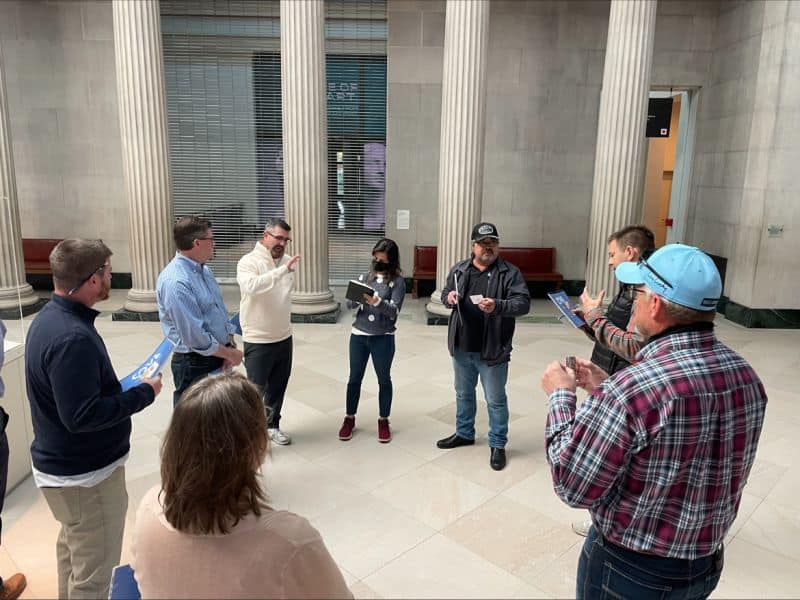

Jay Zemmol, Regional EHS Manager – AAM
Jay Zemmol, Regional EHS Manager for AAM, was one of the first from AAM to attend COVE’s Foundations of Visual Literacy workshop. After his initial training, Zemmol and his team began incorporating Visual Literacy into AAM’s safety program. They worked long hours to ensure Visual Literacy did not become the next “flavor of the month” training program. Zemmol felt employees tend to shut down fast if training is introduced as “here’s one more thing to do.”
Integrating Visual Literacy
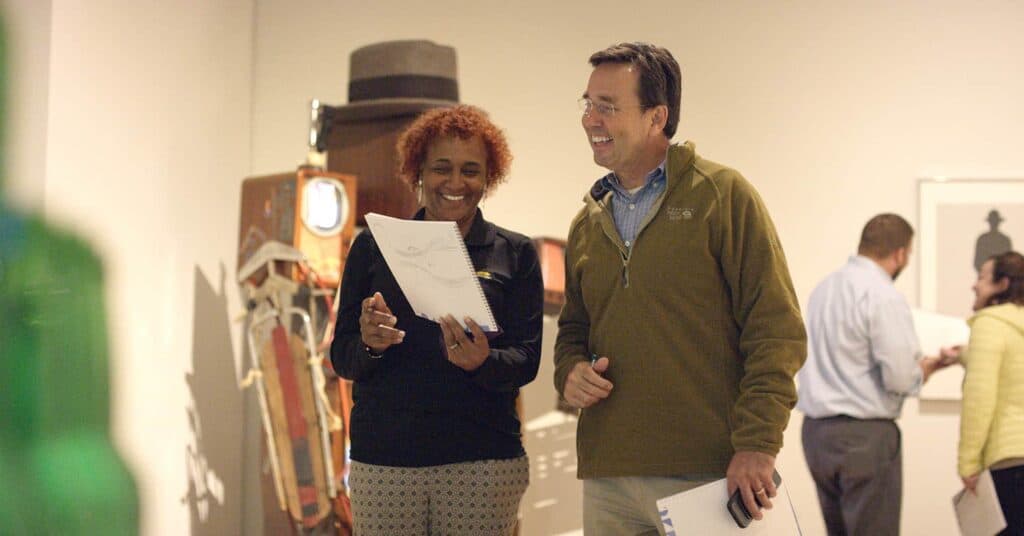
“The first thing our AAM Associates realized was how little they actually see, across the board,” said Zemmol. “Visual Literacy gave our people an ‘aha’ moment.” AAM Associates immediately saw how Visual Literacy could be applied to job safety analyses, formal audits and weekly safety walks. Zemmol agrees that the training works and ”has definitely changed the way we see things on the shop floor.”
Visual Literacy is not “formulaic or mechanistic training.” It is “people-centered and helps you recognize your biases, your blind spots, and opens the door to more awareness,” says Zemmol. AAM has introduced Visual Literacy across its organization as part of its hazard hunts. Hundreds of AAM Associates were trained to use Visual Literacy tools and AAM measured the number of hazards identified and how quickly they were addressed.“
Train your trainers in Visual Literacy, hold workshops, and integrate these tools into what you are already doing,” said Zemmol. This approach allows for Visual Literacy to become part of a natural evolution of activities you’ve been doing.
Outcomes to Date
- Since implementing Visual Literacy training, AAM has seen significant improvements in:
• Hazard recognition
• Behavior-based observations
• Job safety analyses - Today, AAM continues to train Associates in Visual Literacy training principles in a two-hour interactive and activity based workshop that focuses on Seeing the Whole PICTURE® and creating awareness of the Elements of Art – color, lines, shapes, space and texture – to improve seeing, describing and interpreting hazards.
- Zemmol also trained the entire quality staff at an AAM plant in Three Rivers, MI. “They are in a similar situation where they need to see things differently to be able to observe what could cause quality issues,” he said.
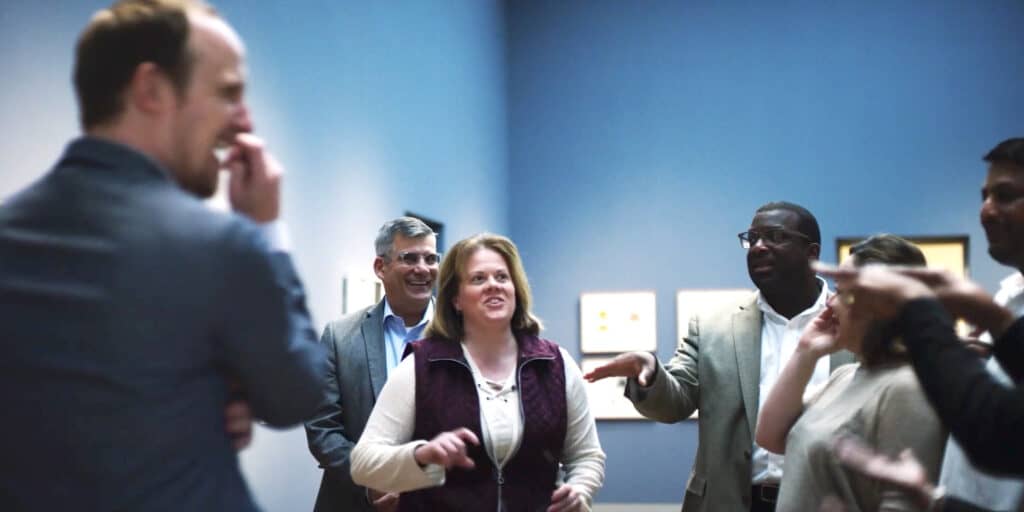
Associates often tell me ‘this is the coolest safety training I’ve ever had,” said Zemmol.’
By incorporating Visual Literacy training, we’ve enhanced our Associates’ tool box to
be able to see hazards on the shop floor,”
said Zemmol.
Next Steps
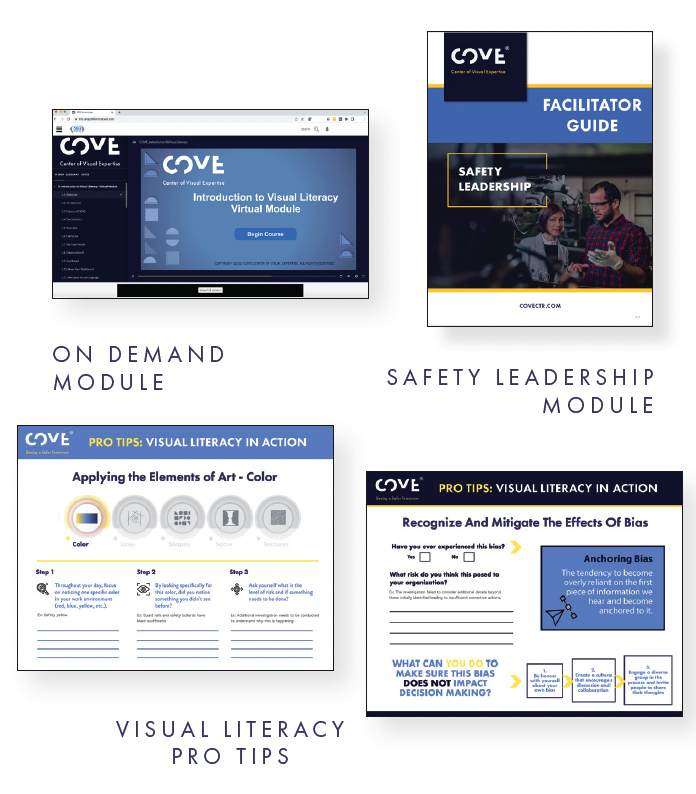
AAM is reviewing plans to adopt new modules that COVE launches such as the On Demand module and the Safety Leadership module. Training is reinforced through visuals, reminder tools, like Visual Literacy Pro Tips, and as part of safety performance assessments.